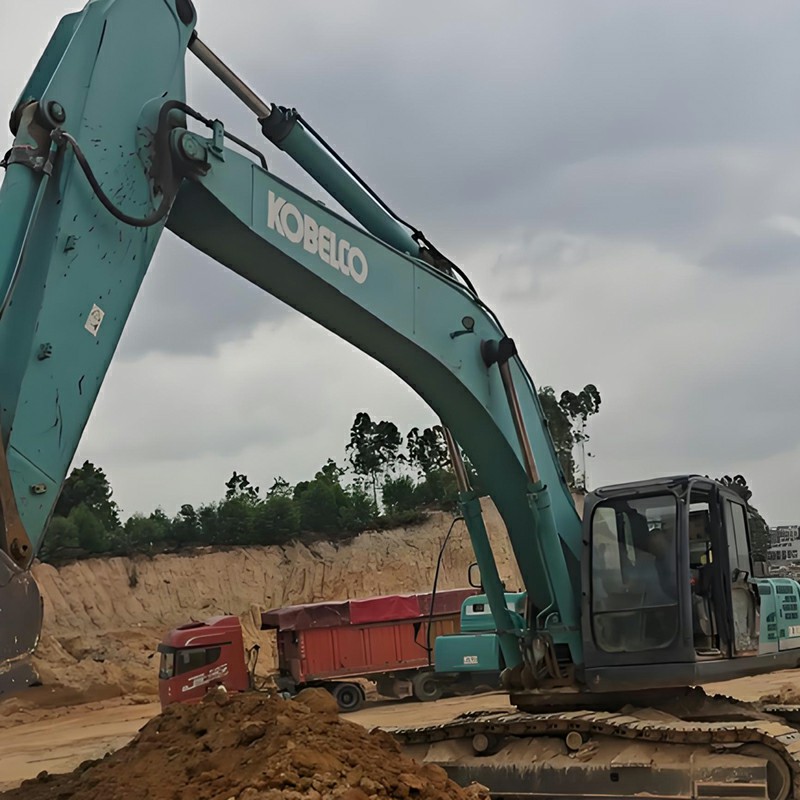
The engine idled normally. Pull a lever and the rpm stayed at the bottom of the scale — no smoke, no unusual noise, and nothing on the monitor. The machine would work, just at a fraction of the speed it should.
This is an SK200-8 with the Hino engine. The fault: engine speed stuck at low idle and refusing to climb, with no fault code stored at all.
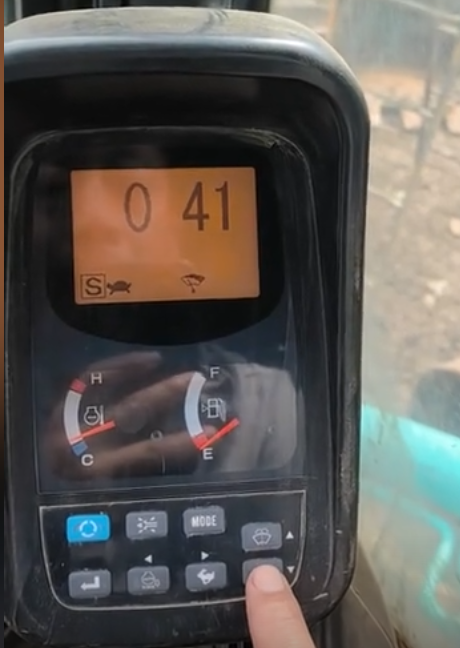
What the SCV does, and why it can stop the engine from revving
The suction control valve — SCV — sits on the inlet of the high-pressure fuel pump and meters how much fuel is allowed into it. The ECU drives the valve with a duty cycle, and by opening and closing it controls the amount of fuel the pump can pressurise.
If the valve sticks, the pump may be unable to build rail pressure. Low rail pressure means low injection quantity, and the ECU responds the only way it can: it limits engine speed. The engine runs, idles, sounds normal, and refuses to climb.
The part that makes this case difficult: a mechanically stuck valve is not an electrical fault. The coil is fine, the circuit is fine, the ECU sees nothing wrong — so it stores nothing.
The clue: the display and the gauge disagreed
With the engine running, the rail pressure value on the monitor climbed as the throttle was applied. A gauge on the fuel system showed that the actual pressure did not.
That gap is the whole diagnosis. The monitor was reporting what the ECU was asking for; the fuel system was not delivering it. Once that was established, the question stopped being "why won't the engine rev" and became "why can't the pump build pressure".
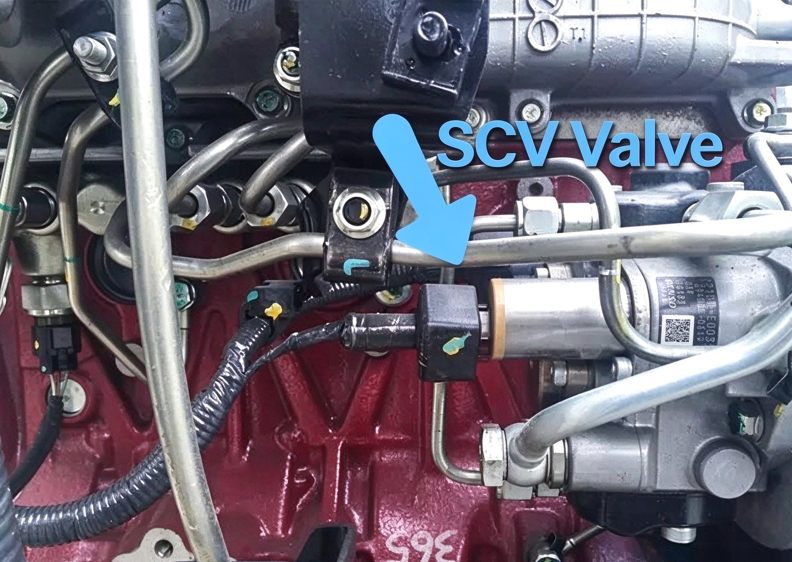
The checks, in the order they were done
1. Read the fault history. Nothing stored. No code does not mean no fault — the ECU only reports what its sensors and circuits can see.
2. Compare commanded and actual rail pressure. Displayed pressure rose, measured pressure did not. That is a fuel delivery problem, not a sensor problem.
3. Bleed the fuel system. Air in the low-pressure side can produce the same symptom. Bleeding changed nothing.
4. Check for air with a clear hose. A section of clear hose on the return line, watched while the engine ran, showed no bubbles. Air was ruled out properly rather than assumed.
5. Measure supply pump inlet pressure. While doing this the engine failed to start at all — the valve had jammed fully shut. The symptom getting worse during testing is itself information.
6. Replace the SCV. The engine returned to normal immediately, with full rpm range and no further faults.
What was inside the old valve
The valve was cut open afterwards. The spool was jammed against the bore and would not return to its seat — a mechanical seizure, not wear of the coil or the connector.
Pulling the spool back by hand and refitting the valve made the machine run correctly again, which confirmed the diagnosis: the fault travelled with the valve, not with the wiring or the pump.
Why this case is worth remembering
A stuck SCV looks like three other faults, and none of them is the SCV:
It looks like a rail pressure sensor fault. The display shows odd values, so the sensor gets blamed. But a failed sensor usually sets a code, and replacing it changes nothing here.
It looks like a blocked filter. Low rail pressure is the classic filter symptom, and a filter is cheaper than a valve — which is exactly why it gets replaced first and fixes nothing.
It looks like an air leak. Hard starting and low power fit an air leak, and bleeding the system seems to help for a while.
The distinguishing test is the one on this machine: compare the rail pressure the ECU is asking for against the pressure the fuel system is actually producing. If the two diverge, the fault is in delivery — valve, pump or supply — not in the electronics.
What to check first next time
1. No code does not clear the fuel system. A mechanically stuck valve, a worn pump or a blocked filter can all be code-free.
2. Trust a gauge over the monitor. The monitor shows a requested value as often as a measured one.
3. Rule out air with a clear hose, not by feel. It takes ten minutes and removes a whole branch of the diagnosis.
4. If the symptom changes during testing, keep going. An engine that suddenly refuses to start while you are measuring inlet pressure is telling you the valve has moved.
5. Change the filter when you change the valve. Debris that jams a spool usually comes from somewhere. On this machine the SCV, the diesel filter and the fuel were all replaced together, and the fuel was sent for analysis.
Parts involved in this case
The valve that fixed it is the SCV valve for SK200-8 / SK210-8, listed under several numbers depending on the parts book — 294009-1221, VH04226E0041, VH04226E0061 and 8-98043687-0 all describe the same valve.
The diesel filter and the fuel were replaced at the same time. The rail pressure sensor and the high-pressure pump were not — both tested normal, which is exactly why the valve was the last thing left to check.
If you are chasing the same symptom, send us the engine number and the code history and we will confirm which SCV is fitted before you order. Fuel system parts for Kobelco are listed under excavator electrical parts. For the other common failure on this pump, see what happens when the supply pump itself fails.
Note
This article describes one SK200-8 with the Hino engine and the fault that was actually found on it. Rail pressure specifications, SCV part numbers and diagnostic steps differ between engine models — confirm them in the engine service manual for the machine you are working on.