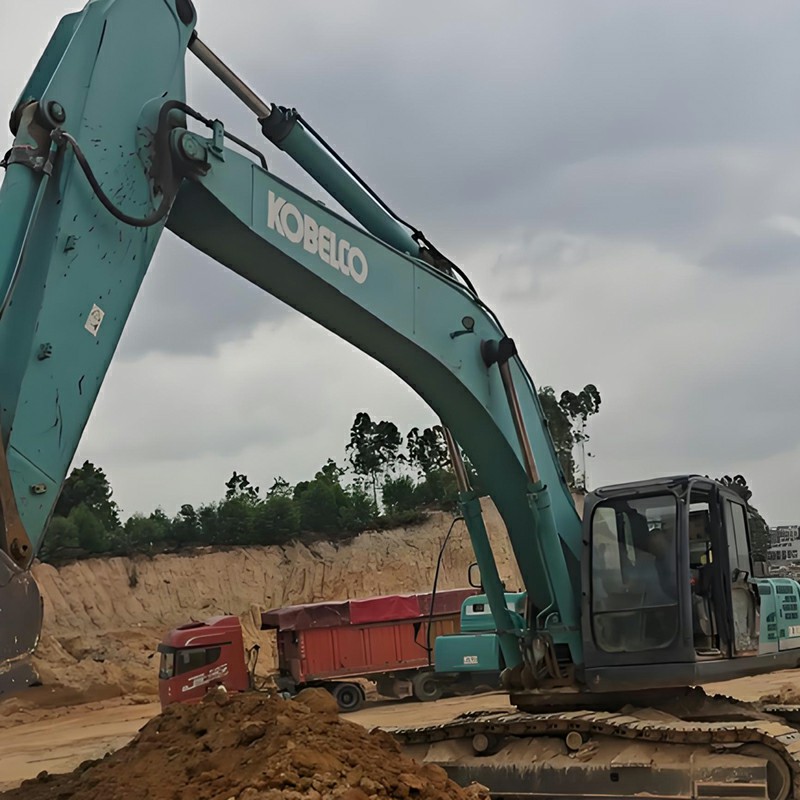
When the coolant level keeps dropping, the usual response is a new cap, then new hoses, then a new radiator — and the level still goes down. Most of the time nobody tested the old cap first. Here is what the cap actually does, and how to decide in two minutes whether it needs replacing.
A low radiator is one of the most common complaints on an excavator, and the usual sequence goes like this: the level drops, so the radiator cap gets replaced. The level drops again, so the hoses go, and eventually the water tank radiator itself.
The problem is rarely which part was fitted. It is that the part was never tested. The cap is the cheapest component in the cooling system — and the one most often replaced without a single check.
It is two valves, not a lid
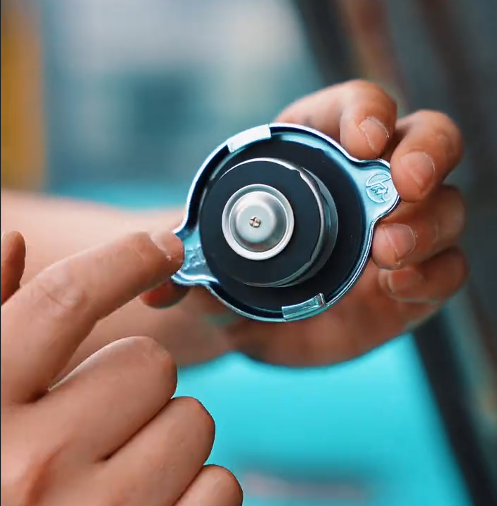
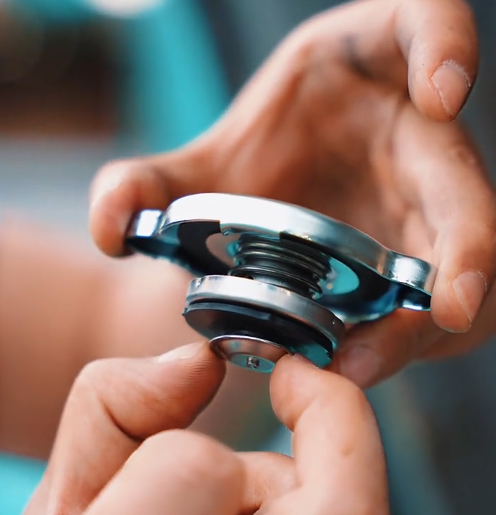
The cap has two sealing faces. The large rubber gasket presses against the flat face of the filler neck and keeps the system from leaking. The small seal in the centre closes the valve in the middle and controls which way the coolant can move.
1. As the engine warms, the coolant expands and pressure builds. The pressure valve lifts, and the excess runs down the overflow hose into the expansion tank.
2. As it cools, the coolant contracts and the system goes into vacuum. The vacuum valve opens and coolant is drawn back through the centre hole into the radiator.
That out-and-back path is why the radiator stays full. If the cap stops sealing, or a valve stops moving, the loop breaks — coolant either leaks out or never comes back, and the radiator empties itself over a few shifts.
Three checks on a cold engine
Check 1 — look for traces at the seat
After the machine has run with the cap fitted, look at the flat face of the filler neck and around the large gasket. Dried coolant leaves a crust — white, green or pink depending on the coolant. If that is where it weeps, the seal is the problem, and the radiator is not.
Check 2 — no leak, but the level still drops
Now look at the small seal and the inside of the filler neck. A hardened or deformed small seal, or a scored, rusted bore, lets the system pull air instead of coolant on cool-down.
A simple cross-check: on a cold engine, look at the expansion tank. After cool-down the tank level should have dropped, because that coolant went back into the radiator. If the tank stays high while the radiator stays low, the return path is not working.
Check 3 — seals fine? test the valve
With the engine cold, press the valve in the centre with a finger and let it go. It should move freely and return on its own. Then check that the centre hole is not blocked with scale. Easy movement plus a clear hole means the cap is doing its job — it does not need replacing.
When it really is time to replace it
• The large gasket is hard, cracked or flattened — you can see it will not sit flat.
• The small seal is deformed, or still will not seal on a clean neck.
• The valve sticks or will not return, and the spring has clearly gone soft.
• The filler neck itself is rusted or deformed — a new cap will not seal on a damaged seat, so fix the seat first.
• Someone fitted a cap with the wrong pressure rating. The rating sets the boiling point, so match the manual.
Never open the cap on a hot engine. The system is under pressure and the coolant can spray. Let it cool, turn to the first stop to release any remaining pressure, then open fully.
Parts mentioned in this article
YN05P00010S006 Radiator Cap — fits SK200-8, SK210-8, SK350-8.
YN05P00058S036 Water Tank Radiator — fits SK200-8, SK210-8.
The takeaway
Two rubber seals and one small spring decide whether a machine keeps losing coolant. Two minutes on a cold engine — press the valve, look for crust, check the expansion tank — tells you whether the cap needs replacing, and saves you from replacing the wrong part.
Based on a hands-on check on a working machine. It does not replace the manufacturer's manual: pressure ratings differ between models, so match the cap to the Operation & Maintenance Manual when replacing.