Excavator Travel Deviation Troubleshooting Guide: Step-by-Step Diagnostic Fixes
Introduction: Tracking deviation in excavators is one of the most common issues in construction machinery. When your Kobelco excavator experiences tracking deviation, how exactly should you troubleshoot the problem step by step? This article breaks down the most systematic and precise troubleshooting and solutions for you.
Step 1: Initial Field Test with Combined Actions
Before jumping straight into adjusting data or replacing parts, perform a simple operational test:
Move your excavator to an open, flat area.
Simultaneously travel forward while operating an upper-body function (such as raising the boom, moving the arm, digging with the bucket, or rotating the upper structure).
Observe whether the machine still skews while performing these combined actions.
Diagnosis Results:
If it stops skewing during combined actions: The root cause lies in the hydraulic pumps (unequal flow output between pump 1 and pump 2). Move to Step 2.
If it still skews during combined actions: The issue is not related to the hydraulic pumps. Move directly to Step 3.
Step 2: Check Pump Solenoid Valves and Regulators
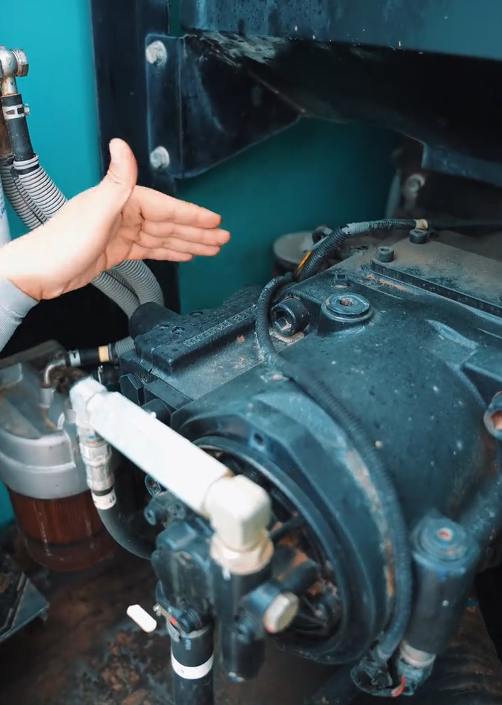
If Step 1 indicates a hydraulic pump issue, the problem is usually caused by the solenoid valves, regulators, or the pump itself:
First, inspect and test the solenoid valves and pump regulators. Swap or adjust them to see if the behavior changes.
If adjusting the valves resolves the deviation, the problem is external (valves/regulators).
If the deviation persists despite adjustments, the hydraulic pump itself has internal failure and requires overhaul or replacement.
Step 3: Analyze Monitor Cluster Travel Data
If the pump test rules out pump problems, you must check the machine's electronic diagnostic data:
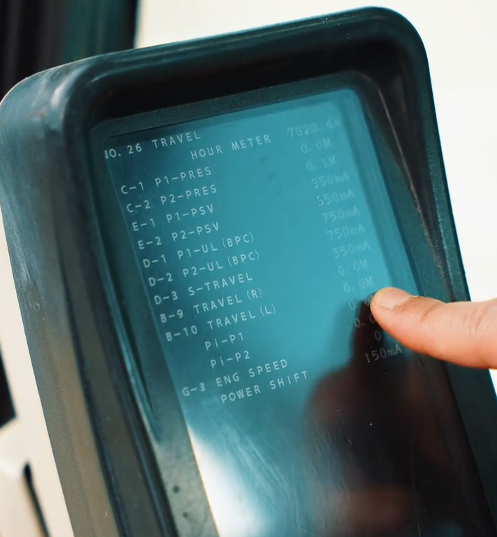
Turn on the ignition key and access the monitor screen.
Navigate to the second page of service data to check Travel Data (e.g., travel pilot pressures and main pressures).
Check pilot pressures B-9 (Travel Right) and B-10 (Travel Left) while pushing the travel levers simultaneously. Are they equal?
Data Analysis:
If pilot pressures are unequal: The issue stems from the travel foot pedal valves or secondary pressure sensors.
If pilot pressures are equal, but main tracking pressures are unequal: You must check the center joint oil seals or travel motor internal leakage.
Step 4: Inspect Travel Motor Leakage & Parking Brake
To confirm if the travel motor or center joint is at fault, follow these physical checks:
Check Motor Internal Leakage: Remove the cover plate over the travel motor and measure the return oil volume (drain flow). A large return volume indicates severe internal motor leakage, requiring motor overhaul. If leakage is minimal, the issue is likely the center joint seals.
Check Parking Brake O-Rings: If both pilot and main pressures are sufficient, open the travel motor to inspect whether the brake disc O-rings are damaged, which prevents the parking brake from releasing properly.