Why Is Your Excavator Engine Oil Level Rising? 3 Hidden Causes & How to Fix It
When excavator owners and operators notice that the oil level is low, they usually top it off immediately. But what if the oil level rises instead of falling? Many owners assume this isn’t a big deal.
In reality, an increase in oil volume is often more dangerous than a decrease! This indicates that foreign liquids have entered the oil pan, diluting the oil and causing a sharp drop in lubrication effectiveness, which in turn leads to abnormal wear on the engine’s core components.
Quick Overview: The 3 Main Culprits Behind Rising Engine Oil
| Fluid Type | Common Frequency | Core Reasons |
|---|---|---|
| Diesel Fuel | High | Damaged return lines, worn injectors, or blown pump seals |
| Water / Coolant | Medium | Blown head gasket, cracked cylinder block/head |
| Hydraulic Oil | Low (Rare) | Failed hydraulic pump seal combined with blocked drain hole |
Deep Dive: 3 Causes and Detailed Inspection Guide
1. Diesel Fuel Mixing into Engine Oil (Most Common)
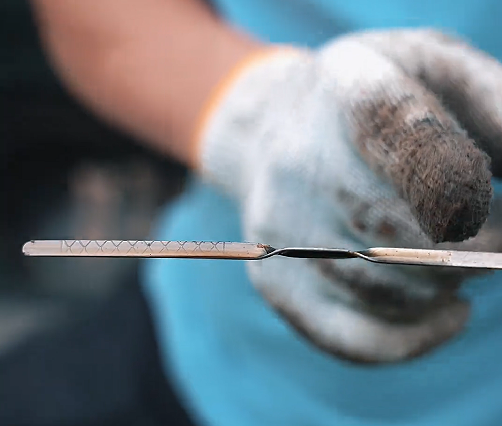
Image: An operator pulling out an excavator engine dipstick to check oil levels
If diesel gets into your oil pan, it is usually caused by one of three component failures:
The Fuel Return Pipe or Gasket: The return line cracks or its sealing gasket fails.
Worn Fuel Injector Nozzles: The injector tips wear out over time, causing fuel to drip constantly.
Blown Fuel Injection Pump Seal: The framework oil seal on the diesel pump fails.
Step-by-Step Inspection :
Check the Return Pipe: Remove the fuel return pipe. Inspect it closely for any cracks, and check if the sealing gaskets are visibly damaged or deformed. Replace them if necessary.
Inspect the Injectors (Cold Engine Test): Remove the injectors when the engine is completely cold. Check the very bottom tip of the nozzle. If it is wet with fuel, the injector is leaking and needs service or replacement.
Inspect the Fuel Injection Pump: If the lines and injectors are fine, remove the diesel pump and check whether the internal framework oil seal has blown out.
2. Water / Coolant Intrusion
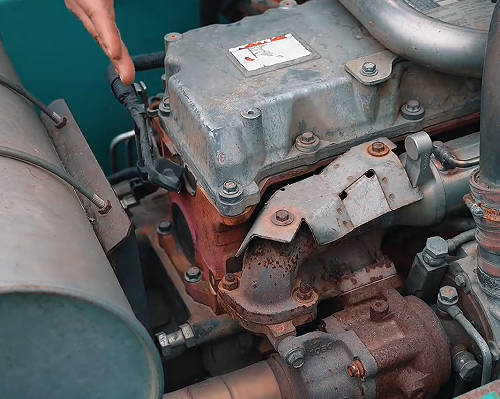
Image: Detailed view of a heavy equipment engine block
If your oil looks milky white or frothy, water or engine coolant is leaking into the system. This is a severe issue usually triggered by:
A malfunctioning turbocharger.
A blown cylinder head gasket.
Cracks in the engine cylinder block or cylinder head.
Expert Advice: Water leaks can instantly destroy your engine bearings. Because diagnosing internal engine cracks requires specialized pressure testing tools, it is highly recommended to call in a professional mechanic immediately.
3. Hydraulic Oil Migration (The Rare Case)
It may seem hard to believe that hydraulic fluid could mix with engine oil, but for this to happen, a series of extremely specific conditions must be met:
The framework oil seal of the hydraulic pump fails, causing hydraulic oil to leak out.
The oil leaks into the connecting housing between the engine and the hydraulic pump.
Normally, this area has a weep/drain hole. However, if this hole becomes completely clogged with dust, dirt, or debris, the trapped hydraulic oil builds up extreme pressure.
The high pressure eventually blows past the engine's crankshaft rear oil seal, forcing hydraulic oil directly into the engine oil pan.。
If you actually encounter this exact chain of failures, your luck is truly one in a million!